
Cybersecurity has become one of the most important areas of the modern technology industry. As businesses move more systems to the cloud, adopt artificial intelligence, and handle increasingly sensitive data, the need for skilled cybersecurity professionals continues to grow.
For people who want to build or advance a career in this field, professional certifications can provide a structured way to develop and demonstrate their knowledge. Among the organizations offering recognized cybersecurity credentials, ISC2 is one of the most established names.ISC2 certifications offer a structured way to develop and demonstrate cybersecurity knowledge, from entry-level fundamentals to advanced security leadership.
However, choosing an ISC2 certification is not always straightforward. There are different credentials for beginners, security operations professionals, cloud specialists, governance and compliance professionals, software security experts, architects, engineers, and managers.
So, which one should you choose?
This guide explains the major ISC2 certifications 2026 candidates should know about, compares their focus and difficulty, and provides an ISC2 certification roadmap to help you identify the most suitable option.
What Are ISC2 Certifications?
ISC2 is a global nonprofit organization focused on cybersecurity education and professional certification. Its certification portfolio covers different stages of a cybersecurity career, including entry-level knowledge, specialized technical skills, and senior-level security management.
The certifications are designed for professionals working in areas such as:
- Cybersecurity operations
- Information security
- Security management
- Cloud security
- Application security
- Risk management
- Security architecture
- Governance and compliance
Because the certifications target different skill levels, candidates do not necessarily need to start with the most advanced credential.
ISC2 Cybersecurity Certifications in 2026
The ISC2 certification portfolio includes credentials designed for both newcomers and experienced cybersecurity professionals.
Some of the most relevant certifications include:
Certification Best suited for
Certified in Cybersecurity (CC) Beginners
SSCP IT and security professionals
CISSP Experienced security professional
CCSP Cloud security professionals
CSSLP Application security professionals
CGRC Governance and risk professionals
Each credential serves a different purpose, so the best ISC2 certification depends on your current skills and career objective.
1. Certified in Cybersecurity (CC)
The Certified in Cybersecurity (CC) is designed for people who are entering the cybersecurity field or building foundational knowledge.
It can be particularly useful for:
- Students and recent graduates
- Career changers
- Junior IT professionals
- People exploring cybersecurity as a career
- Professionals without extensive cybersecurity experience
The certification covers fundamental concepts such as security principles, business continuity, disaster recovery, incident response, access controls, network security, and security operations.
Who Should Choose CC?
CC is generally a logical starting point if you are new to cybersecurity and want to understand the fundamentals before moving toward more advanced certifications.
For example, someone with general IT knowledge but little security experience could use CC as a foundation before considering credentials such as SSCP or CISSP.
2. Systems Security Certified Practitioner (SSCP)
The Systems Security Certified Practitioner (SSCP) focuses more heavily on hands-on security operations.
It is suitable for professionals involved in implementing and managing security controls and protecting organizational systems.
The certification covers areas including:
- Access controls
- Security operations and administration
- Risk identification
- Incident response and recovery
- Network and communications security
- Cryptography
- Systems and application security
Who Should Choose SSCP?
SSCP may be appropriate for IT and cybersecurity professionals who want to develop their operational security skills.
Typical roles associated with this type of knowledge include:
- Security administrator
- Security analyst
- Systems administrator
- Network security professional
- Security operations specialist
Someone starting with CC could potentially progress toward SSCP after gaining practical experience.
3. Certified Information Systems Security Professional (CISSP)
CISSP is one of the most widely recognized advanced credentials in the ISC2 portfolio.
It is aimed at experienced cybersecurity professionals who work across multiple areas of information security and may have responsibilities involving security architecture, risk management, governance, and leadership.
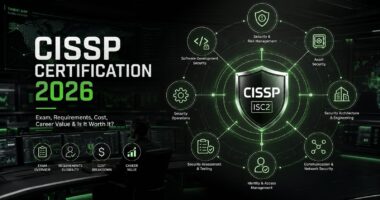
The CISSP Common Body of Knowledge covers eight domains:
- Security and Risk Management
- Asset Security
- Security Architecture and Engineering
- Communications and Network Security
- Identity and Access Management
- Security Assessment and Testing
- Security Operations
- Software Development Security
Who Should Choose CISSP?
CISSP is generally intended for experienced cybersecurity professionals rather than people just entering the field.
It can be relevant to professionals pursuing positions such as:
- Security manager
- Security architect
- Security consultant
- Information security manager
- Security director
- Chief information security officer
Candidates should review the current experience requirements before planning their certification path.
4. Certified Cloud Security Professional (CCSP)
Cloud environments have become an important part of modern IT infrastructure, creating demand for professionals who understand cloud-specific security risks.
The Certified Cloud Security Professional (CCSP) focuses specifically on cloud security.
Its areas include:
- Cloud concepts, architecture and design
- Cloud data security
- Cloud platform and infrastructure security
- Cloud application security
- Cloud security operations
- Legal, risk and compliance
Who Should Choose CCSP?
CCSP can be a strong option for professionals who already have experience with cloud technologies and want to specialize in securing cloud environments.
For example, a cybersecurity professional working with cloud infrastructure may pursue CCSP to strengthen their understanding of cloud-specific security controls and risks.
5. Certified Secure Software Lifecycle Professional (CSSLP)
The Certified Secure Software Lifecycle Professional (CSSLP) focuses on integrating security throughout the software development lifecycle.
It is relevant to professionals involved in developing, testing, securing, or managing software.
Topics include:
- Secure software concepts
- Secure software requirements
- Architecture and design
- Implementation
- Testing
- Deployment
- Software lifecycle management
- Supply chain and software security
Who Should Choose CSSLP?
CSSLP may be suitable for professionals whose careers combine software development and cybersecurity.
Software developers, application security professionals, software architects, and security specialists working with development teams may find this certification particularly relevant.
6. Governance, Risk and Compliance Certification (CGRC)
The CGRC certification focuses on governance, risk, and compliance activities.
It is particularly relevant to professionals working with organizational security policies, risk management, compliance requirements, and security authorization processes.
Key areas include:
- Governance
- Risk management
- Security controls
- Compliance
- Assessment
- Authorization
- Monitoring
Who Should Choose CGRC?
CGRC can be considered by professionals interested in security governance, risk, compliance, and assurance roles.
It may be particularly relevant for people working with regulated organizations where security requirements and compliance frameworks are an important part of daily responsibilities.
ISC2 Certification Roadmap for 2026
There is no single path that every cybersecurity professional must follow. Your ISC2 certification roadmap should reflect your experience and career goals.
A simple progression could look like this:
Beginner → CC → SSCP → Advanced specialization or CISSP
However, not everyone needs every certification.
Path 1: Complete Beginner
If you have little or no cybersecurity experience:
CC → Gain practical experience → SSCP or specialization
CC provides foundational knowledge, while practical experience helps you determine which cybersecurity area interests you most.
Path 2: IT Professional Moving Into Security
If you already work in IT:
IT experience → SSCP → Specialized certification or CISSP
SSCP can help bridge the gap between general IT responsibilities and dedicated security operations.
Path 3: Experienced Security Professional
If you already have substantial cybersecurity experience:
Professional experience → CISSP
An experienced professional may not need to start with an entry-level credential. Instead, the appropriate certification depends on their existing knowledge and career objectives.
Path 4: Cloud Security Career
For professionals focused on cloud environments:
Security/IT experience → Cloud security skills → CCSP
This path is particularly relevant for professionals who want to specialize in cloud security rather than general information security.
Path 5: Application Security Career
For software and application security professionals:
Development/security experience → CSSLP
This path emphasizes security throughout the software development lifecycle.
How to Choose the Best ISC2 Certification
Choosing the best ISC2 certification requires looking beyond popularity. Consider these five factors.
1. Your Current Experience
Your experience should be the first consideration.
A beginner may benefit more from CC, while an experienced security professional may be ready for CISSP or a specialized credential.
2. Your Career Goal
Think about the job you want to perform.
For example:
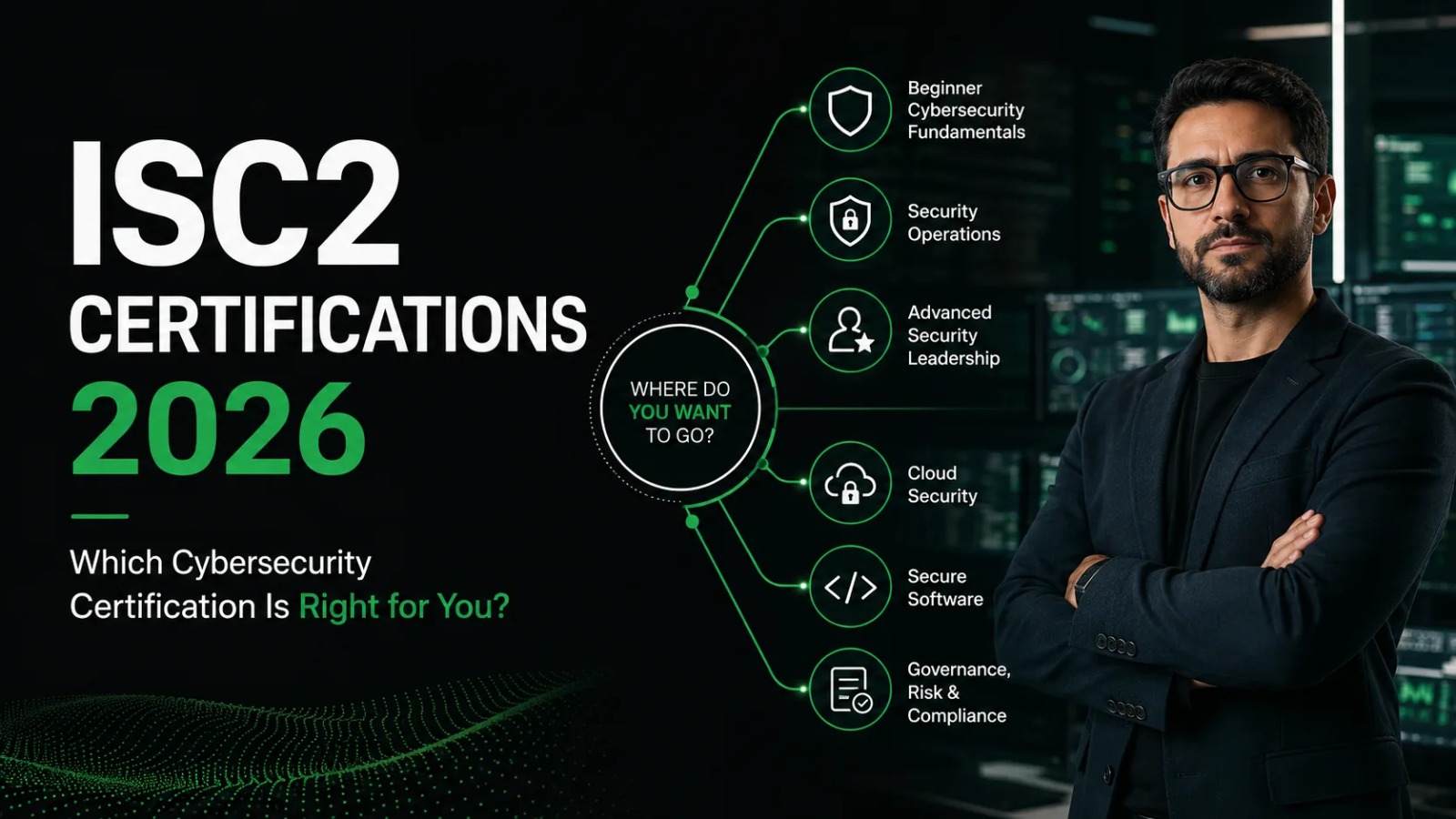
- Cybersecurity fundamentals: CC
- Security operations: SSCP
- Senior security management: CISSP
- Cloud security: CCSP
- Application security: CSSLP
- Governance and compliance: CGRC
3. Your Technical Interests
Cybersecurity is a broad field. Some professionals enjoy technical security operations, while others prefer governance, architecture, cloud security, or application security.
Your interests can help determine which certification will be most useful.
4. Experience Requirements
Some ISC2 credentials have professional experience requirements. Before registering for an exam, review the current eligibility rules and determine whether your background meets them.
If you do not yet meet the experience requirement for a particular credential, you may need to build relevant professional experience first or consider an alternative starting point.
5. Long-Term Career Plans
Avoid selecting a certification only because it is well known.
Instead, ask:
“Will this certification support the role I want in the next few years?”
For example, a cloud-focused professional may gain more value from a cloud security credential than from choosing a general certification simply because it is popular.
Once you have selected the certification that matches your career goals, you can use structured exam preparation resources to organize your study plan, review important topics, and practice exam-style questions. CertsGate provides preparation resources for cybersecurity certification exams.
ISC2 Certifications 2026: Which One Should You Choose?
The answer depends largely on your current career stage.
Choose CC if:
- You are new to cybersecurity.
- You are a student or career changer.
- You want foundational security knowledge.
- You have limited professional cybersecurity experience.
Choose SSCP if:
- You work in IT or security operations.
- You want to strengthen practical security skills.
- You manage or implement security controls.
- You are building toward more advanced security responsibilities.
Choose CISSP if:
- You have significant cybersecurity experience.
- You want broader security responsibilities.
- You are targeting security leadership or architecture roles.
- You work across multiple information security domains.
Choose CCSP if:
- Cloud security is your career focus.
- You work with cloud infrastructure or services.
- You want specialized cloud security knowledge.
Choose CSSLP if:
- You work in software development or application security.
- You want to integrate security into the software lifecycle.
- Secure software development is central to your career.
Choose CGRC if:
- You are interested in governance and compliance.
- Risk management is part of your role.
- You work with security controls, assessments, or authorization processes.
Are ISC2 Certifications Worth Considering in 2026?
ISC2 certifications can be useful for professionals who want to validate cybersecurity knowledge and demonstrate specialized expertise.
However, certification alone does not replace practical experience.
A strong cybersecurity career usually combines:
- Relevant education
- Industry certifications
- Hands-on technical experience
- Problem-solving ability
- Knowledge of security frameworks and practices
- Continuous professional development
For example, earning a certification while working on real security projects can provide a stronger professional foundation than relying on certification study alone.
Common Mistakes When Choosing an ISC2 Certification
Candidates can make several mistakes when planning their certification path.
Choosing based only on popularity
A widely recognized certification is not automatically the best choice for every professional
Ignoring experience requirements
Always check the current requirements before selecting an advanced certification.
Collecting certifications without a career plan
Multiple credentials can be useful, but they should support a clear professional direction.
Neglecting practical experience
Certification knowledge becomes more valuable when it can be applied to real security problems.
Starting too advanced
If you are completely new to cybersecurity, jumping directly into an advanced certification may create an unnecessary learning gap.
Frequently Asked Questions
What are ISC2 certifications?
ISC2 certifications are professional cybersecurity credentials covering areas such as cybersecurity fundamentals, security operations, information security management, cloud security, application security, and governance.
Which ISC2 certification is best for beginners?
The Certified in Cybersecurity (CC) is designed for people who are new to cybersecurity and want to establish foundational knowledge.
Is CISSP suitable for beginners?
CISSP is primarily intended for experienced cybersecurity professionals. Beginners should generally build foundational knowledge and relevant experience before pursuing it.
What is the difference between CISSP and CCSP?
CISSP covers broad information security concepts and leadership, while CCSP focuses specifically on cloud security. The better choice depends on your career direction.
How should I create an ISC2 certification roadmap?
Start by assessing your current experience and career goal. Beginners can consider CC, while IT and security operations professionals may consider SSCP. Experienced professionals can explore CISSP, CCSP, CSSLP, or CGRC based on their specialization.
Final Thoughts
The ISC2 certifications 2026 portfolio provides options for different stages and areas of cybersecurity. There is no universal certification that is right for everyone.
If you are starting your cybersecurity journey, CC can provide a foundation.
Professionals focused on security operations can consider SSCP, while experienced security professionals may pursue CISSP. Those developing specialized careers can explore CCSP, CSSLP, or CGRC depending on their professional goals.
The most effective ISC2 certification roadmap is therefore one that matches your current experience, desired role, and long-term career direction. Instead of choosing a certification simply because it is popular, evaluate what skills you need next and select the credential that supports that goal.