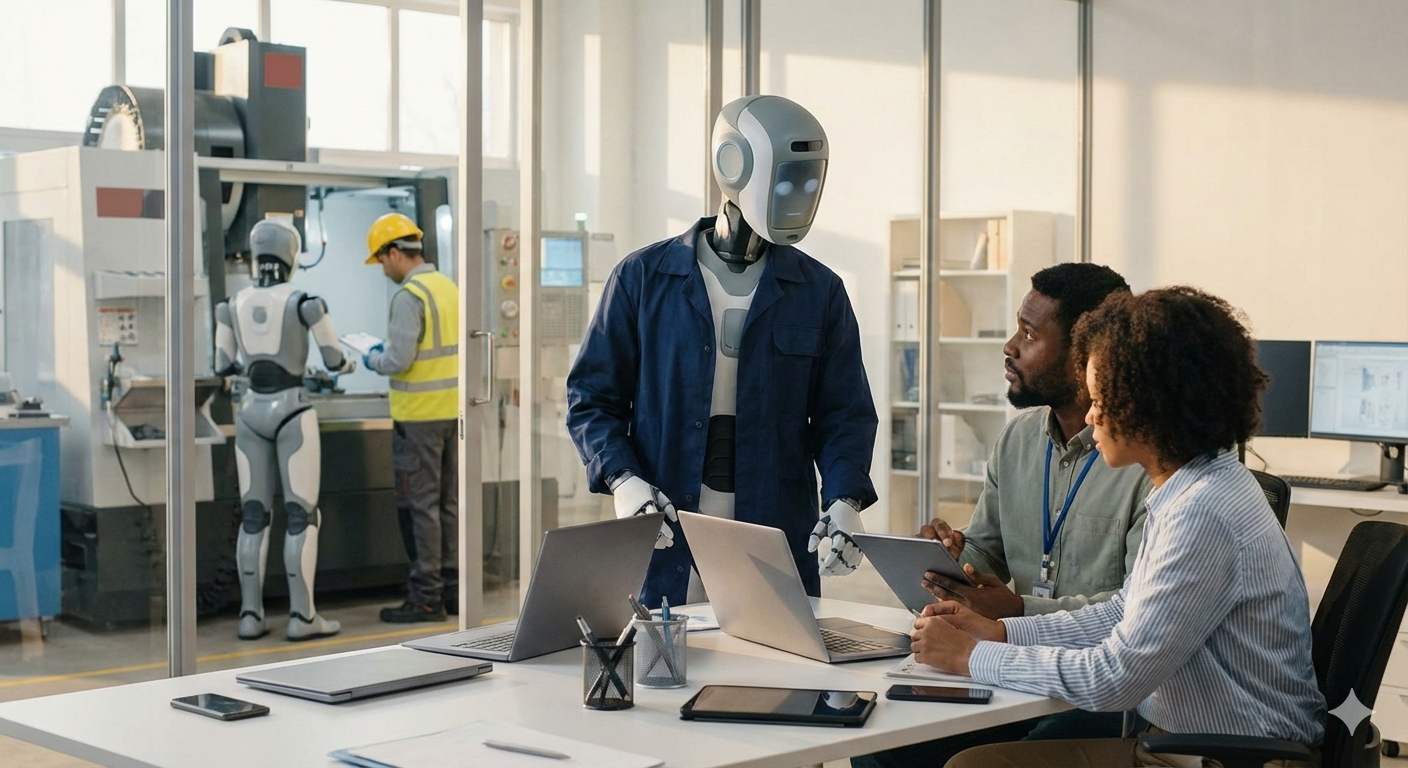

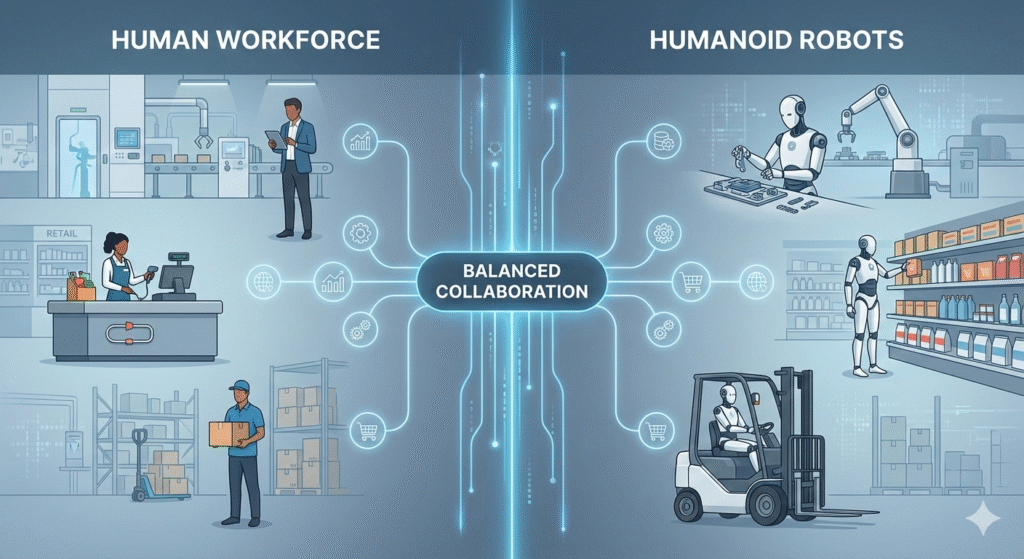
Humanoid robots are no longer just lab experiments. They are entering workplaces, hospitals, warehouses, and customer service environments.
These robots look and move like humans. They can walk, talk, see, and interact with people. Companies are investing billions into humanoid robotics to solve labor shortages and improve productivity.
This raises an important question.
What happens to human jobs?
This blog explains what humanoid robots are, why they matter now, and how they will change work in the coming years.
What Are Humanoid Robots?
Humanoid robots are machines designed to resemble the human body in shape and movement.
They usually have:
- a head with sensors
- arms and hands
- legs for walking
- AI-powered decision systems
Simple Example
A humanoid robot that greets customers, answers questions, and guides them inside a store.
Why Beginners Should Care
Humanoid robots are built to work where humans already work. That makes their impact on jobs direct and unavoidable.
Why Humanoid Robots Are Trending in 2025
Several forces are driving their rise.
1. Global Labor Shortages
Many industries lack workers. Robots fill the gap.
2. Advances in AI
Robots now understand speech, faces, and instructions.
3. Better Hardware
Motors, batteries, and sensors are cheaper and stronger.
4. Corporate Investment
Tech giants are racing to deploy humanoid workers.
5. Aging Populations
Robots assist elderly care and healthcare systems.
Jobs Most Affected by Humanoid Robots
Humanoid robots focus on repetitive, physical, and service-based tasks.
High-Risk Roles
- Warehouse workers
- Retail assistants
- Security guards
- Cleaning staff
- Receptionists
These jobs rely on routine actions that robots can learn.
Jobs That Will Grow Because of Humanoid Robots
Robots do not only replace jobs. They also create new ones.
New Job Categories
- Robot maintenance technicians
- AI trainers
- Robotics engineers
- Safety supervisors
- Human–robot interaction designers
Humans shift from manual work to supervision and creativity.
Benefits of Humanoid Robots in the Workplace
- 24/7 productivity
Robots do not get tired. - Improved workplace safety
Dangerous tasks are automated. - Consistent performance
No human error from fatigue. - Lower long-term costs
Reduced turnover and training expenses.
Mini Case Insight
Warehouses using humanoid robots report faster order fulfillment and fewer injuries.
Challenges and Concerns
Humanoid robots also bring serious concerns.
1. Job Displacement
Workers fear replacement.
2. Skill Gaps
Not everyone can transition easily.
3. Ethical Issues
How much decision power should robots have?
4. Cost of Adoption
Small businesses may struggle initially.
How Humans Can Stay Relevant
Step 1 — Learn Tech Skills
Basic AI, robotics, and data skills matter.
Step 2 — Focus on Human Strengths
Creativity, empathy, leadership, and judgment.
Step 3 — Adapt Continuously
Lifelong learning is no longer optional.
Robots handle tasks. Humans handle meaning.
Expert Insights + Future Predictions
1. Humans and Robots Will Work Together
Collaboration will replace competition.
2. Physical Jobs Will Transform
Robots assist rather than fully replace.
3. Education Will Change
Schools will teach robotics and AI early.
4. New Economic Models
Shorter workweeks and reskilling programs may emerge.
5. Regulation Will Increase
Governments will set robot labor rules.
Conclusion
Humanoid robots are not the end of human work. They are the end of outdated work models.
Jobs will change. Some will disappear. Many new ones will appear.
Those who adapt, learn, and focus on uniquely human skills will thrive in a robot-powered future.