
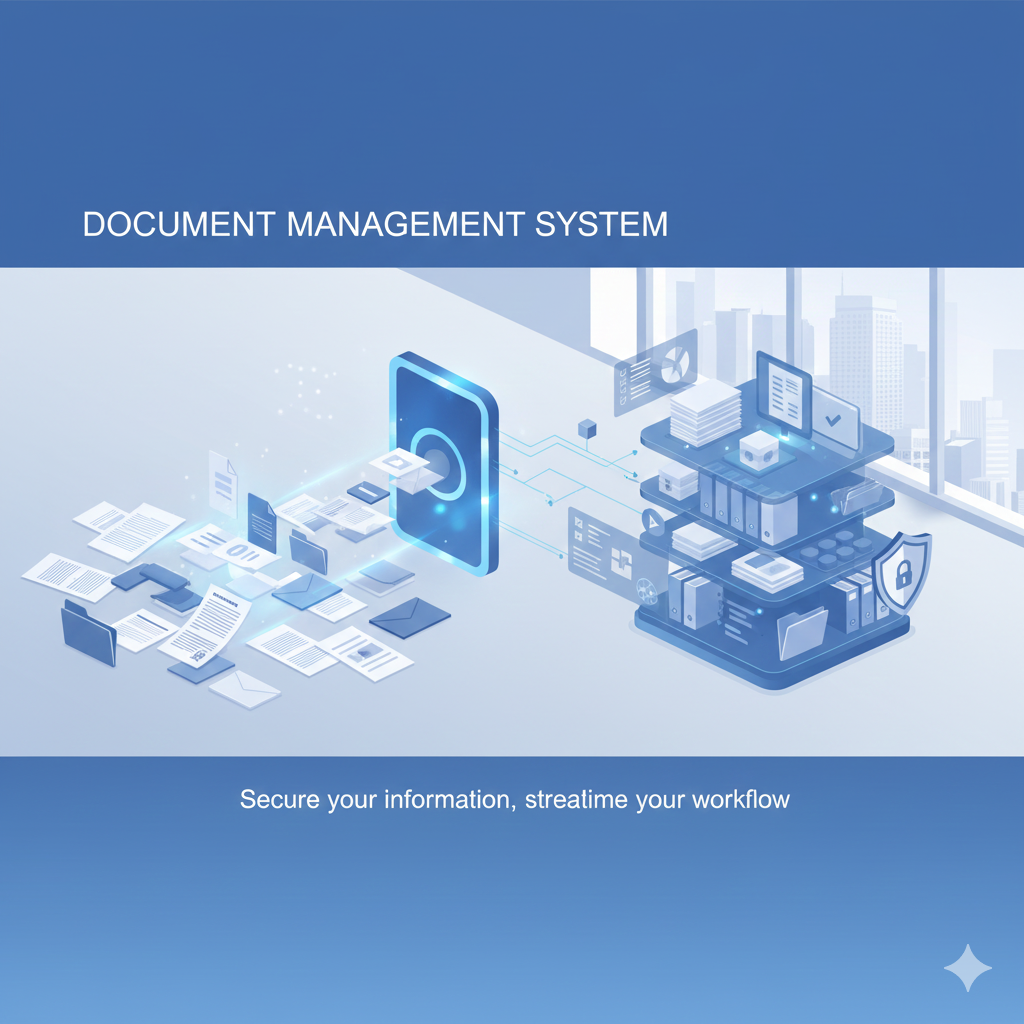

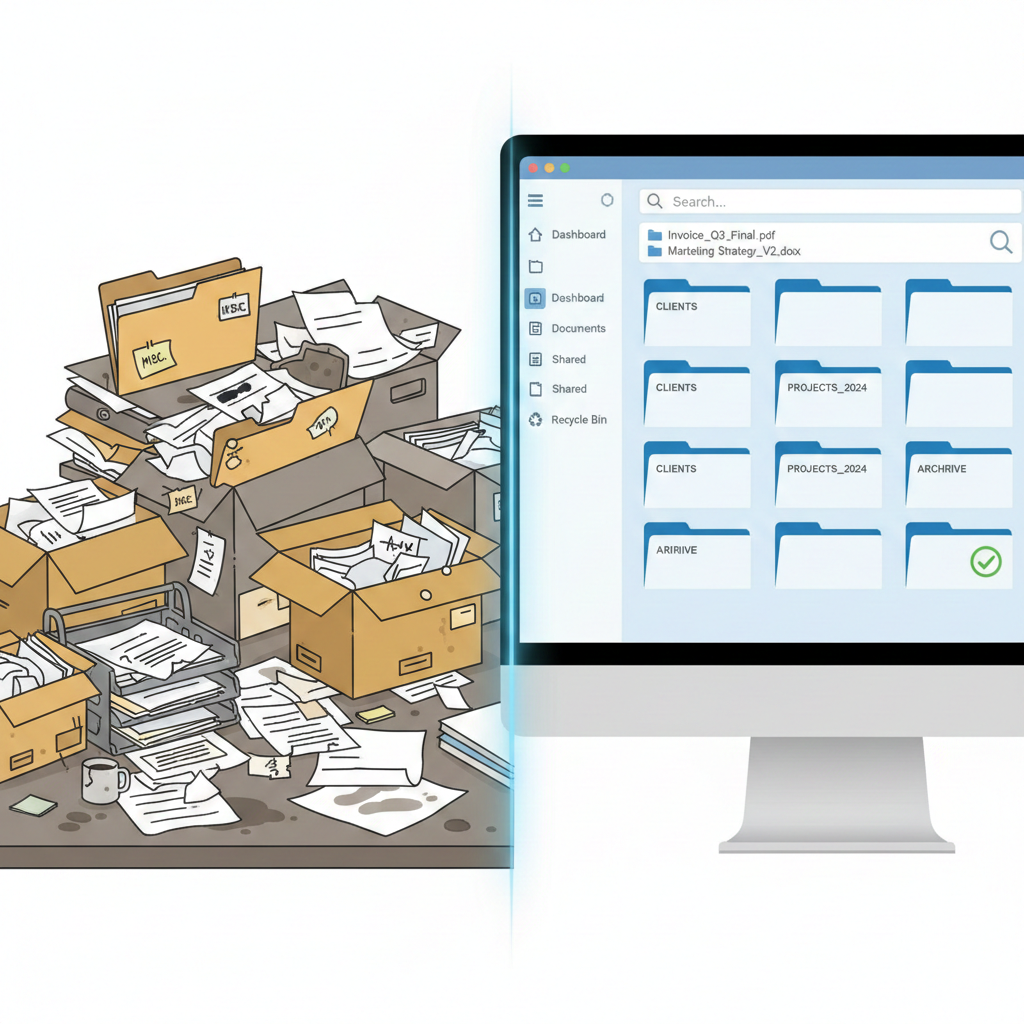
In today’s digital world, businesses deal with a huge number of documents every day. These documents can include invoices, reports, contracts, presentations, PDFs, Word files, and many other formats. Managing all these documents manually or storing them in scattered folders can quickly become confusing, time-consuming, and risky.
This is where a DMS (Document Management System) becomes extremely important.
In this blog, we will explain what a DMS is, how it works, why businesses need it, and how it improves efficiency and security—all in simple and easy words.
What Is a DMS (Document Management System)?
A Document Management System (DMS) is a digital system used to store, organize, manage, track, and retrieve documents in one centralized place.
Instead of using paper files or saving documents randomly on computers, a DMS allows organizations to manage everything electronically and securely.
Simple Definition
A DMS is a digital solution that helps businesses store and manage documents efficiently and safely.
Why Do Businesses Need a DMS?
As businesses grow, the number of documents also increases. Without a proper system, companies face many problems.
Problems Without a DMS
- Files are stored in different folders and devices
- Documents are hard to find
- Risk of data loss
- No control over who accesses files
- Multiple versions of the same document
- Wasted time searching for information
A DMS solves all these problems by bringing everything into one organized system.
How a DMS Works (Simple Explanation)
A Document Management System works in a few simple steps:
- Upload Documents
Users upload files such as PDFs, Word documents, images, or spreadsheets. - Organize Documents
Documents are organized using folders, tags, categories, or metadata. - Search and Retrieve
Users can quickly find documents using keywords or filters. - Access Control
Only authorized users can view, edit, or download files. - Version Control
The system keeps track of document changes and saves older versions. - Backup and Security
Documents are stored securely with backups to prevent data loss.
Key Features of a Document Management System
A good DMS provides several powerful features that help businesses work efficiently.
1. Centralized Storage
All documents are stored in one secure location, making management easy.
2. Easy Search
Users can find documents instantly using keywords, file names, or tags.
3. Access Control
Admins can decide who can view, edit, or delete documents.
4. Version Control
Every update is tracked, so users always know which version is the latest.
5. Security and Compliance
DMS systems protect sensitive documents with encryption and permissions.
6. Backup and Recovery
Data is automatically backed up, reducing the risk of loss.
Types of Document Management Systems
There are different types of DMS solutions depending on business needs.
1. Cloud-Based DMS
- Hosted online
- Accessible from anywhere
- Easy to scale
- Examples: Google Drive, Dropbox Business
2. On-Premise DMS
- Installed on company servers
- Full control over data
- Higher setup cost
- Used by large enterprises
3. Hybrid DMS
- Combination of cloud and on-premise
- Flexible and secure
Common Examples of DMS Software
Some popular Document Management Systems include:
- Google Drive
- Microsoft SharePoint
- Dropbox Business
- DocuWare
- Alfresco
- OpenDocMan (WordPress-based)
These tools are widely used by businesses of all sizes.
DMS vs Traditional File Storage
| Feature | Traditional Storage | DMS |
| Organization | Manual folders | Smart categorization |
| Search | Slow | Instant |
| Security | Limited | High |
| Version Control | None | Automatic |
| Collaboration | Difficult | Easy |
| Backup | Manual | Automatic |
This comparison clearly shows why modern businesses prefer a DMS.
Benefits of Using a DMS
Using a Document Management System provides many advantages.
1. Saves Time
Employees spend less time searching for documents.
2. Improves Productivity
Easy access to documents improves workflow efficiency.
3. Enhances Security
Sensitive information is protected from unauthorized access.
4. Reduces Paper Usage
A DMS supports a paperless work environment.
5. Supports Remote Work
Employees can access documents from anywhere.
Use Cases of DMS in Different Industries
1. Corporate Offices
Managing contracts, reports, HR files, and policies.
2. Healthcare
Storing patient records securely and compliantly.
3. Education
Managing student records, assignments, and research documents.
4. Legal Firms
Handling case files, legal documents, and evidence.
5. Finance and Accounting
Managing invoices, audits, and financial reports.
DMS and Digital Transformation
A DMS plays a major role in digital transformation. It helps organizations move from manual processes to digital workflows.
With a DMS:
- Processes become faster
- Data becomes more accurate
- Collaboration improves
- Businesses become more agile
This makes a DMS an essential tool in the modern workplace.
Is a DMS Suitable for Small Businesses?
Yes. Today, many DMS solutions are affordable and scalable, making them suitable for:
- Small businesses
- Startups
- Freelancers
- Remote teams
Cloud-based DMS solutions are especially popular among small businesses.
How to Choose the Right DMS
When selecting a DMS, businesses should consider:
- Ease of use
- Security features
- Storage capacity
- Integration with existing tools
- Cost and scalability
- Customer support
Choosing the right system ensures long-term benefits.
Future of Document Management Systems
The future of DMS is closely connected with:
- Artificial Intelligence (AI)
- Automation
- Smart search
- Workflow automation
- Integration with business tools
Modern DMS platforms are becoming more intelligent, helping businesses make better decisions and manage documents more efficiently.
Final Thoughts
A Document Management System (DMS) is no longer a luxury—it is a necessity for modern businesses. It helps organizations manage documents efficiently, improve security, save time, and support digital workflows.
Whether a company is small or large, investing in a DMS leads to better organization, higher productivity, and long-term success.
One-Line Summary
A DMS is a smart digital solution that helps businesses store, manage, and protect documents in an organized and secure way.