

Artificial Intelligence is no longer a futuristic concept reserved for research labs and sci-fi movies. It’s already embedded in our everyday lives — from the recommendations we see on streaming platforms, to the navigation apps we rely on, to the tools we use for learning, creativity, and work. As AI becomes more powerful and more widespread, a new kind of literacy has emerged as essential: AI literacy.
AI literacy is not about becoming a programmer or a data scientist. It’s about understanding how AI systems work at a basic level, how they influence decisions, what their strengths and limitations are, and how to use them responsibly and effectively. In the same way that digital literacy became crucial in the internet age, AI literacy is becoming a foundational skill for the modern world.
This article explores what AI literacy really means, why it matters, and how individuals, educators, and organizations can build it.
What Is AI Literacy?
AI literacy refers to the ability to understand, evaluate, use, and critically engage with artificial intelligence systems. It combines technical awareness, critical thinking, ethical understanding, and practical skills.
An AI-literate person does not need to know how to build a neural network from scratch. Instead, they should be able to:
- Recognize when AI is being used
- Understand, at a high level, how AI systems learn and make decisions
- Use AI tools effectively and responsibly
- Question AI outputs rather than blindly trusting them
- Understand the ethical, social, and economic implications of AI
AI literacy sits at the intersection of technology, society, and human judgment. It empowers people to remain active decision-makers rather than passive users of intelligent systems.
Why AI Literacy Matters More Than Ever
1. AI Is Everywhere — Often Invisibly
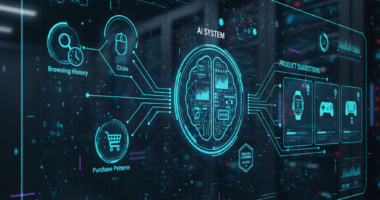
Many AI systems operate in the background. Search engines rank results using AI. Social media platforms decide which content you see using algorithms. Banks use AI to detect fraud. Employers use AI tools to screen résumés.
When AI operates invisibly, people may not realize how much influence it has over their choices and opportunities. AI literacy makes these systems visible and understandable, helping users regain awareness and control.
2. AI Is Not Neutral
AI systems are trained on data created by humans — and human data contains biases, assumptions, and gaps. As a result, AI can unintentionally reinforce discrimination, misinformation, or unfair outcomes.
Without AI literacy, users may assume that AI outputs are objective or “correct.” In reality, AI reflects probabilities, patterns, and design choices — not truth or moral judgment.
An AI-literate society is better equipped to question:
- Why did the system make this decision?
- Whose data was used?
- Who benefits, and who might be harmed?
3. The Workforce Is Rapidly Changing
AI is reshaping jobs across industries — not just in technology, but in healthcare, education, marketing, design, law, and more. While AI may automate certain tasks, it also creates new opportunities for people who know how to work with AI rather than compete against it.
AI literacy helps individuals:
- Use AI as a productivity tool
- Adapt to new roles and workflows
- Understand which skills are becoming more valuable
- Make informed career decisions
In the future, AI literacy may be as important as basic computer skills.
4. Misinformation and Deepfakes Are Rising
Generative AI can produce text, images, audio, and video that look convincingly real. This has enormous creative potential — but also serious risks.
AI literacy helps people:
- Identify AI-generated content
- Question sources and authenticity
- Avoid spreading misinformation
- Understand the limits of what AI can and cannot verify
In a world of synthetic media, critical thinking becomes inseparable from AI literacy.
Core Components of AI Literacy
AI literacy is not a single skill. It’s a combination of several competencies that work together.
1. Basic Understanding of How AI Works
At a foundational level, AI literacy includes understanding concepts such as:
- Machine learning: Systems learn patterns from data rather than following fixed rules.
- Training data: AI models learn from large datasets, which shape their behavior.
- Probabilistic outputs: AI does not “know” things; it predicts likely outcomes.
- Limitations: AI can make mistakes, hallucinate information, or fail outside its training context.
This knowledge helps users set realistic expectations and avoid overtrust.
2. Practical AI Usage Skills
AI literacy also means knowing how to use AI tools effectively. This includes:
- Writing clear prompts or instructions
- Refining outputs through iteration
- Combining AI assistance with human judgment
- Knowing when not to use AI
Effective use is not about automation alone — it’s about collaboration between human intelligence and machine intelligence.
3. Critical Evaluation of AI Outputs
AI systems can sound confident even when they are wrong. AI literacy teaches users to:
- Verify important information
- Cross-check sources
- Look for logical gaps or inconsistencies
- Recognize when an answer “sounds right” but may be misleading
This skill is especially important in education, research, and decision-making contexts.
4. Ethical and Social Awareness
AI raises important ethical questions, including:
- Data privacy and surveillance
- Consent and data ownership
- Bias and fairness
- Environmental costs of large models
- Accountability for AI-driven decisions
AI literacy includes understanding these issues and participating thoughtfully in conversations about how AI should be developed and governed.
AI Literacy in Education
Education plays a crucial role in building AI literacy — not just for future technologists, but for everyone.
Moving Beyond Fear and Hype
Many discussions around AI in education swing between fear (“AI will replace learning”) and hype (“AI will solve everything”). AI literacy encourages a more balanced approach.
Students should learn:
- What AI can help with (practice, feedback, creativity)
- What AI cannot replace (critical thinking, empathy, values)
- How to use AI as a learning partner, not a shortcut
Teaching With AI, Not Just About AI
AI literacy is best developed through hands-on experience. Instead of banning AI tools outright, educators can:
- Teach students how to ask good questions
- Show how AI can assist brainstorming and revision
- Discuss errors and biases in AI responses
- Encourage reflection on when AI helps or hinders learning
This approach prepares students for the real world, where AI tools will be unavoidable.
AI Literacy for Businesses and Organizations
Organizations that invest in AI without investing in AI literacy risk poor outcomes.
Smarter Adoption, Better Results
AI-literate teams are better at:
- Choosing appropriate tools
- Understanding risks and limitations
- Integrating AI into workflows
- Avoiding blind reliance on automation
AI literacy turns AI from a “black box” into a strategic asset.
Building Trust With Customers and Employees
Transparency matters. When employees and customers understand how AI is used, trust increases.
AI-literate organizations are more likely to:
- Communicate clearly about AI usage
- Address ethical concerns proactively
- Use AI responsibly and sustainably
Trust, once lost, is difficult to regain — AI literacy helps protect it.
Common Myths About AI Literacy
“AI Literacy Is Only for Tech People”
False. AI affects everyone, regardless of profession. Understanding AI is a civic skill, not a niche one.
“AI Is Too Complex to Understand”
While AI systems can be complex, the core ideas are accessible. You don’t need advanced math to be AI-literate.
“AI Literacy Means Trusting AI More”
Actually, it means trusting AI less blindly and more wisely.
How to Start Building AI Literacy Today
AI literacy is a journey, not a checklist. Some practical steps include:
- Pay attention to where AI appears in your daily life
- Experiment with AI tools thoughtfully
- Ask how and why an AI system produces certain outputs
- Stay informed about ethical and social discussions around AI
- Practice critical thinking with AI-generated content
Small, consistent engagement builds confidence and understanding over time.
The Future Belongs to the AI-Literate
Artificial Intelligence will continue to evolve, but one thing is clear: the people who thrive will not be those who avoid AI, nor those who trust it blindly, but those who understand it.
AI literacy empowers individuals to remain informed, adaptable, and in control. It strengthens democracy, improves education, supports ethical innovation, and helps society navigate technological change with intention rather than fear.