

Sales and marketing have always been the backbone of business growth. Traditionally, these teams spent countless hours on repetitive tasks such as finding leads, sending emails, following up with prospects, analyzing data, and managing customer relationships. While these tasks are important, they are time-consuming and often slow down growth.
This is where AI Agents for Sales & Marketing are changing the game.
In 2026, businesses are increasingly using AI agents to automate workflows, improve customer engagement, and drive higher conversions. These intelligent agents work 24/7, analyze large amounts of data, and take action without constant human involvement.
In this blog, we will explain what AI agents are, how they work in sales and marketing, their benefits, real-world use cases, and why they are becoming essential for modern businesses.
What Are AI Agents?
AI agents are intelligent software programs that can:
- Analyze data
- Make decisions
- Take actions
- Learn from outcomes
Unlike basic automation tools, AI agents are autonomous. This means they don’t just follow fixed rules—they adapt and improve over time.
Simple Definition
AI agents are smart digital assistants that can perform sales and marketing tasks automatically and intelligently.
Why Sales & Marketing Need AI Agents
Modern sales and marketing teams face several challenges:
- Too many leads to manage
- High competition
- Need for personalization
- Limited time and human resources
- Complex data from multiple platforms
AI agents help solve these problems by handling repetitive and data-heavy tasks, allowing human teams to focus on strategy and relationship building.
How AI Agents Work in Sales & Marketing
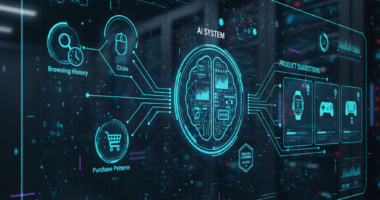
AI agents connect with:
- CRMs
- Email platforms
- Websites
- Social media
- Analytics tools
They continuously collect data, analyze user behavior, and take actions such as:
- Sending personalized emails
- Qualifying leads
- Scheduling meetings
- Recommending next best actions
All of this happens automatically and in real time.
Key Use Cases of AI Agents in Sales
1. Lead Generation and Qualification
AI agents can:
- Scan websites, social media, and databases
- Identify potential leads
- Score leads based on interest and behavior
- Prioritize high-quality prospects
This ensures sales teams focus only on leads that are most likely to convert.
2. Automated Follow-Ups
Following up with leads is critical, but often missed by humans.
AI agents:
- Send timely follow-up emails
- Personalize messages based on user behavior
- Adjust communication based on responses
This increases response rates and reduces lost opportunities.
3. CRM Management
AI agents can:
- Update CRM records automatically
- Track deal stages
- Predict deal closure probability
- Suggest next steps for sales reps
This keeps sales pipelines clean and accurate.
4. Sales Forecasting
By analyzing historical data and current trends, AI agents can:
- Predict future sales
- Identify risks in the pipeline
- Help managers make better decisions
Key Use Cases of AI Agents in Marketing
1. Personalized Marketing Campaigns
AI agents analyze customer behavior to:
- Segment audiences
- Personalize email and ad content
- Optimize campaign timing
This leads to higher engagement and conversions.
2. Content Optimization
AI agents can:
- Analyze which content performs best
- Suggest topics and formats
- Optimize headlines and messaging
This helps marketers create content that resonates with their audience.
3. Social Media Automation
AI agents can:
- Schedule posts
- Analyze engagement
- Respond to common messages
- Identify trending topics
This improves social media presence without constant manual effort.
4. Marketing Analytics and Insights
AI agents continuously monitor:
- Conversion rates
- Click-through rates
- Customer journeys
They provide actionable insights instead of just raw data.
Benefits of Using AI Agents for Sales & Marketing
1. Increased Efficiency
AI agents work 24/7 without breaks, increasing productivity.
2. Better Lead Conversion
Personalized and timely communication improves conversion rates.
3. Cost Reduction
Automation reduces the need for large teams handling repetitive tasks.
4. Data-Driven Decisions
AI agents base actions on data, not guesswork.
5. Scalability
AI agents can handle growing workloads as the business scales.
AI Agents vs Traditional Automation Tools
| Feature | Traditional Automation | AI Agents |
| Decision Making | Rule-based | Intelligent |
| Adaptability | Limited | High |
| Personalization | Basic | Advanced |
| Scalability | Medium | High |
| Learning Ability | None | Continuous |
AI agents go beyond automation by learning and improving over time.
Industries Using AI Agents for Sales & Marketing
AI agents are widely used in:
- E-commerce
- SaaS companies
- Real estate
- Finance
- Healthcare
- Education
Any business that relies on leads, customers, and engagement can benefit from AI agents.
Challenges and Considerations
While AI agents offer many benefits, businesses should also consider:
- Data quality
- Integration with existing tools
- Privacy and compliance
- Proper human oversight
AI agents work best when combined with human strategy and creativity.
The Future of AI Agents in Sales & Marketing (2026 and Beyond)
The future of sales and marketing is agent-driven.
Upcoming trends include:
- Fully autonomous sales agents
- Multi-agent collaboration
- Real-time personalization
- Deeper CRM integration
- Predictive customer journeys
AI agents will not replace humans but will empower teams to perform at a higher level.
Who Should Use AI Agents?
AI agents are ideal for:
- Growing businesses
- Sales-driven companies
- Marketing agencies
- Startups looking to scale
- Enterprises managing large customer bases
Final Thoughts
AI Agents for Sales & Marketing are transforming how businesses generate leads, engage customers, and close deals. By automating repetitive tasks and providing intelligent insights, AI agents help teams work smarter, faster, and more effectively.
In 2026, businesses that adopt AI agents will have a significant competitive advantage over those that rely only on traditional methods.